Screws That Back Out
Steel panels grow in the afternoon sun and shrink overnight, and that movement slowly backs screws out and splits their rubber washers. Water then rides the shank into the building.

As a Portage metal roof coating contractor, we treat rust, reseal loose screws and open laps, then coat the panels in one continuous layer.
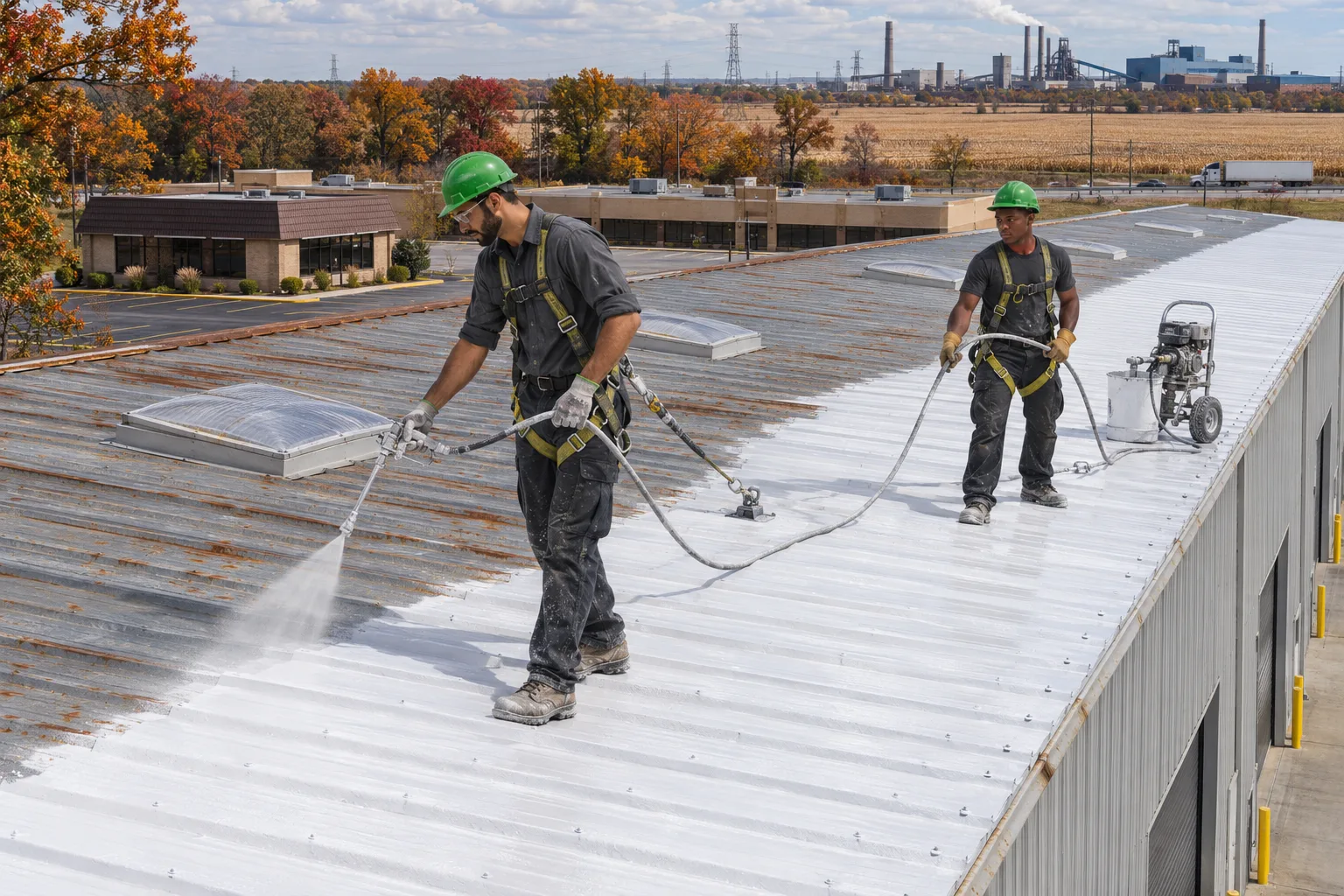
Portage metal roof coating work starts with the problems owners spot from the ladder or under the ceiling. These six come up on most roofs we walk.
Steel panels grow in the afternoon sun and shrink overnight, and that movement slowly backs screws out and splits their rubber washers. Water then rides the shank into the building.
Sealant tape between panels dries and shrinks with age. Once a lap opens, wind-driven rain and snowmelt slip sideways under the overlap toward the purlins.
Orange bloom shows first where water lingers: panel ends, laps, gutters, and around curbs. Caught while the steel is firm, it gets brushed, primed, and coated.
Skylight panels and their curbs break the rib pattern, and their flashing fails early. A ceiling stain near a skylight usually leads straight back to the curb.
Low spots and clogged gutters hold meltwater against laps for days. That water steers the system choice toward a coating rated for ponding.
Slow leaks and condensation soak the insulation blanket, which sags and holds water against the steel. It has to be found and dried or replaced before coating.
A coated roof keeps the original panels in service. Here is what changes for the building once the laps, screws, and rust are dealt with.
Screw heads, laps, and flashing seams sit under a single coating instead of hundreds of separate seals that each age on their own schedule.
Primer goes on bare spots before the coating, so corrosion at laps and panel ends stops spreading while the steel underneath is still solid.
A white topcoat reflects summer sun, which keeps panel temperatures down and cuts the daily movement that loosens screws in the first place.
Crews wash, prime, and coat from the roof surface, so docks, offices, and production lines keep running while the job moves across the roof.
Five coating systems cover the commercial roofs around Portage. Each row says which roof that system fits best.
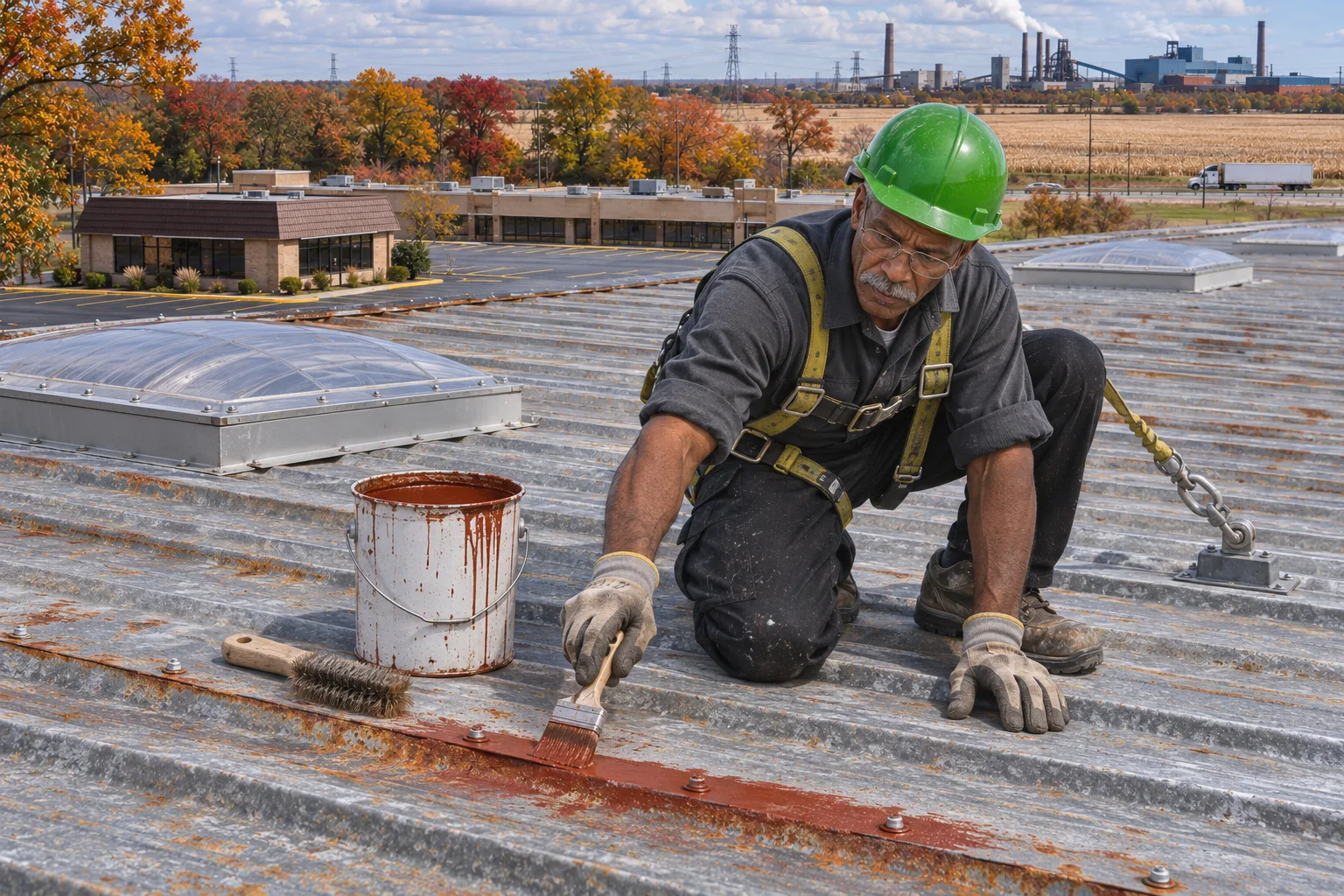
Exposed-fastener and standing-seam steel with firm panels: rust treated, every screw and lap sealed, and the full field coated.

High-solids silicone holds up where water sits after rain, so it goes on low-slope roofs and flat sections near drains.
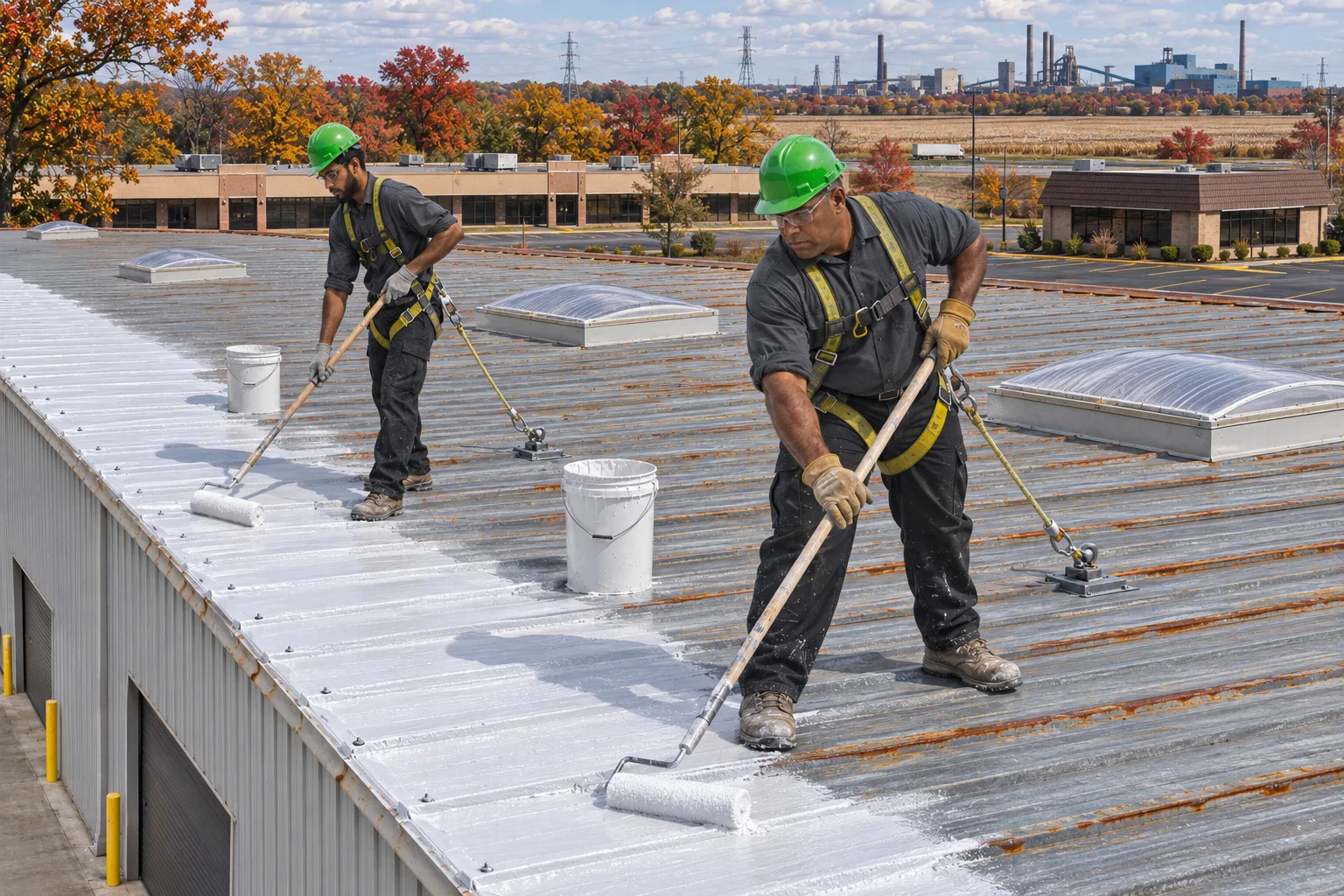
Water-based acrylic in two or more coats suits pitched metal that sheds water fast, applied in warm, dry weather.
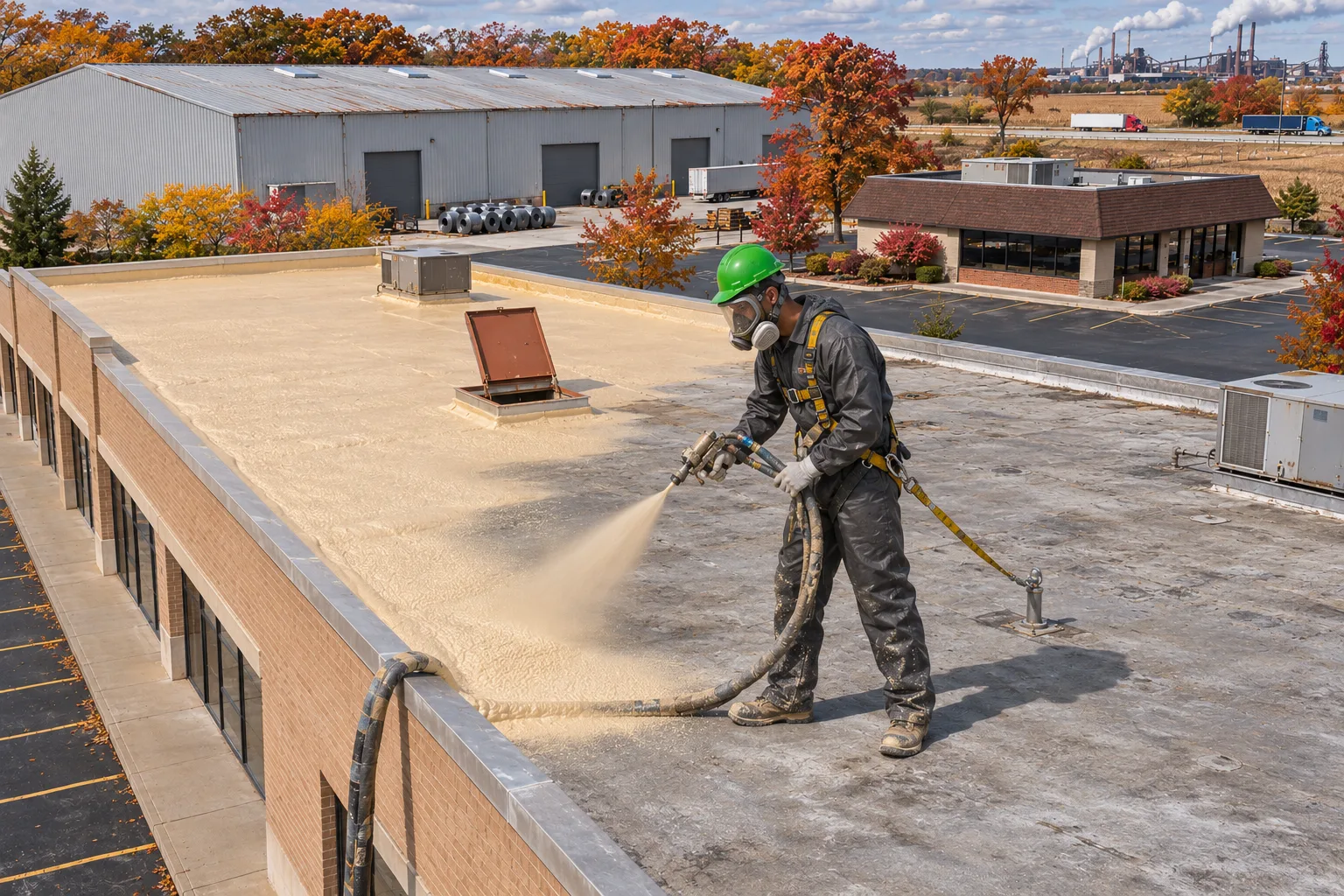
Foam sprayed over the old roof fills the ribs, buries the screw heads, and adds insulation, then takes a protective topcoat.
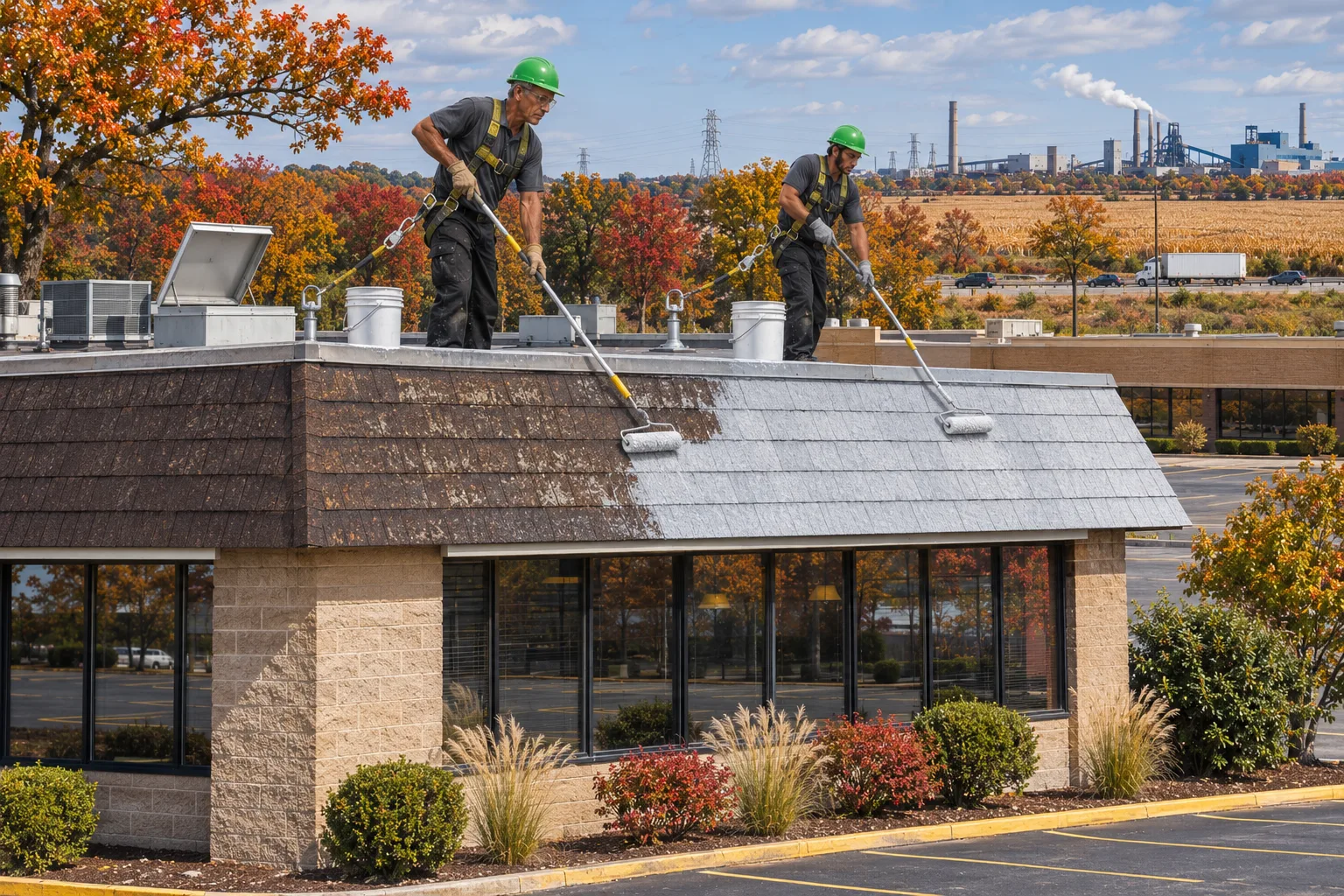
Shingles that still lie flat get cleaned, repaired, and coated to hold granules and seal hairline cracks on offices and churches.
Coatings cure best in the warmer months. A spring or summer inspection gives time to repair laps and screws before the work season closes.
Every roof we coat goes through these four steps in this order. Skipping one leaves a weak spot under the new coating.
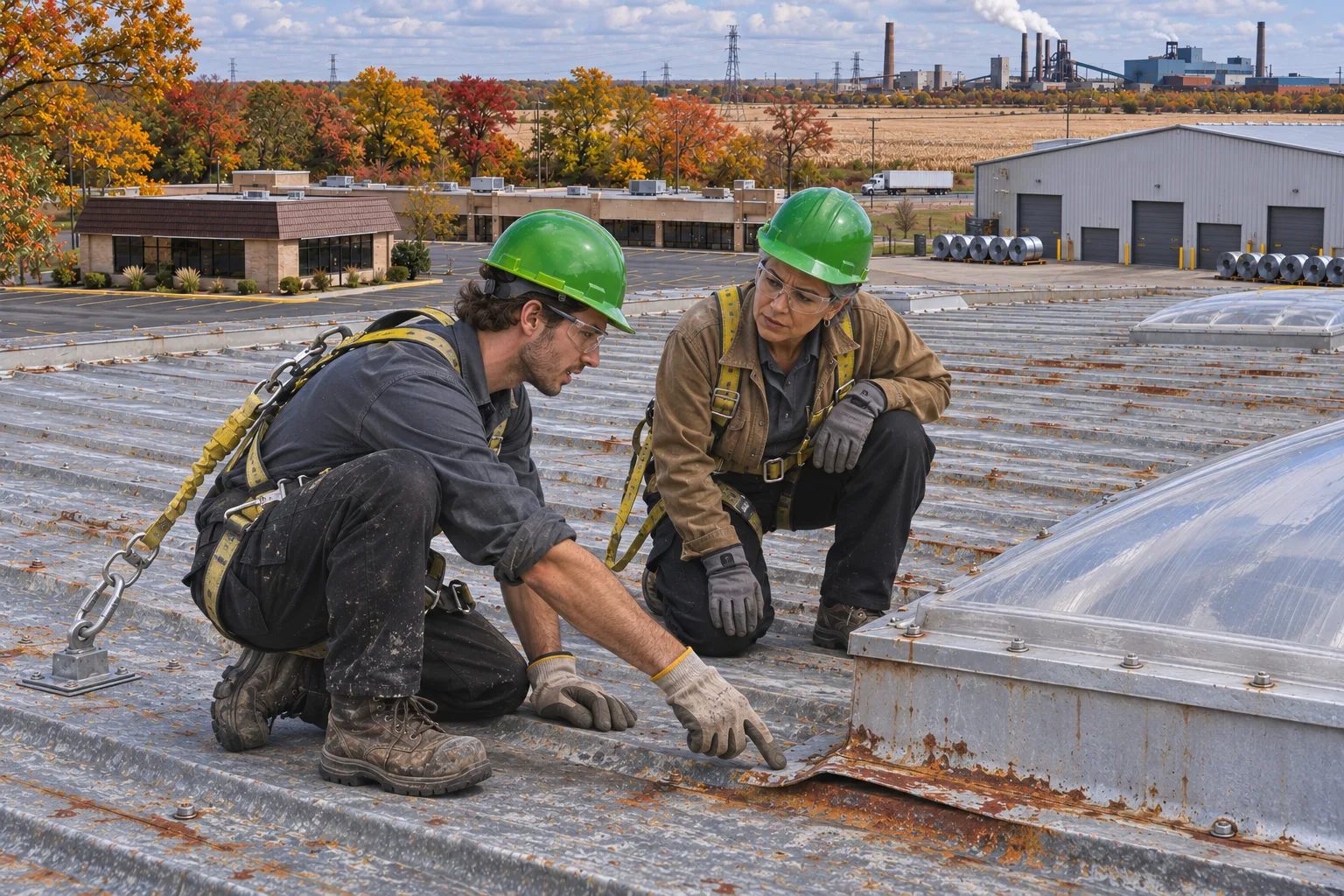
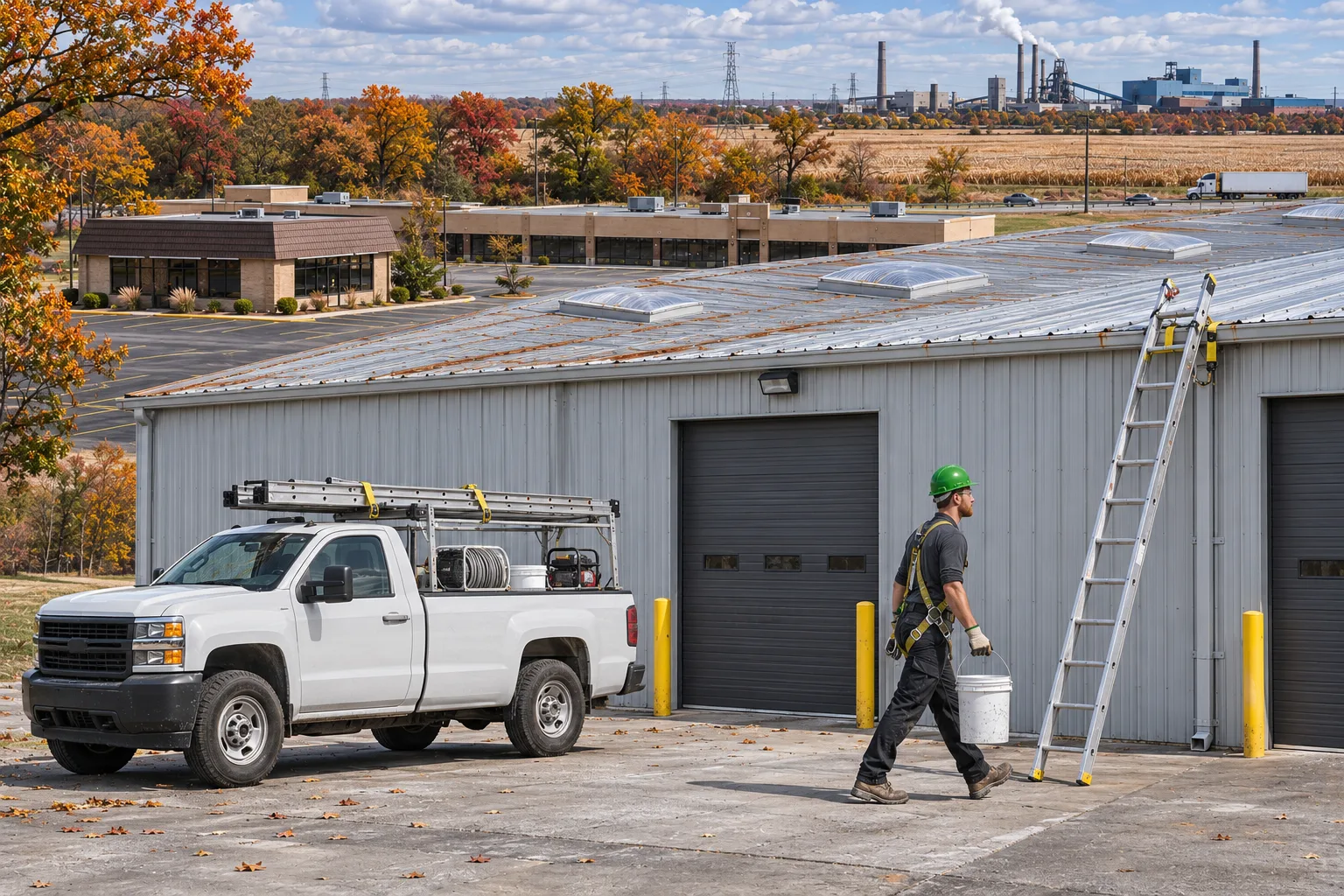
We walk the full roof, probe soft spots, check every lap and curb, and photograph what needs repair. You get the findings in writing before a price.
Panels are pressure-washed to strip chalk and grime. Loose rust comes off by wire brush or grinder, and bare steel gets rust-inhibiting primer.
Stripped screws are swapped for oversized fasteners with new washers. Each screw head and lap gets sealant or reinforced fabric.
The coating goes on by spray or roller to the mils the product sheet calls for, checked with a wet-film gauge as the crew moves.
Most metal roofs can take a coating, some after repairs, and a few should be replaced first. Find the rows that match your roof.
| What You See On The Roof | Coat It | Repair, Then Coat | Replace Instead |
|---|---|---|---|
| Faded or chalky paint on firm panels | Usually Fits | Rarely | Rarely |
| Surface rust that brushes off to bright steel | Sometimes | Usually Fits | Rarely |
| Loose screws and cracked washers | Rarely | Usually Fits | Rarely |
| Open laps or lifted panel edges | Rarely | Usually Fits | Rarely |
| Holes rusted through in many panels | Rarely | Sometimes | Usually Fits |
| Wet insulation across most of the roof | Rarely | Sometimes | Usually Fits |
The dots show the usual answer. The inspection decides it for your roof.
We coat commercial roofs in Portage, Valparaiso, Michigan City, Griffith, Chesterton, and Lake Station.
Building outside these towns? Call us or send us a message.
Owners here often hold a shop, a warehouse, and an office on one lot, each with its own roof age.
We inspect every building on the property and coat them in an order that fits the budget.
Valparaiso metal roof coatingWind off the lake works at eave trim, rake edges, and panel ends until screws loosen and edges lift.
Edges get fastened down and sealed before any coating goes across the field.
Michigan City metal roof coatingDrips inside unheated storage buildings are often condensation on the underside of the panels.
We sort condensation from true leaks first, since coating the outside only fixes one of them.
Griffith metal roof coatingShops and retail buildings mix pitched metal with flatter sections that hold water after rain.
How each section drains decides whether silicone or acrylic goes on it.
Chesterton metal roof coatingSmall shops and storage buildings here take spring hail that dents ribs and cracks old sealant.
We document hail marks with dated photos, then repair and coat the damaged areas.
Lake Station metal roof coatingQuick answers to what owners ask on a first roof walk. Our metal roof coating FAQ covers more.
Planning figures run about $2.50 to $4.00 per square foot to coat and about $5 to $8 per square foot to replace. Your number moves with roof size, how much rust needs grinding and priming, how many screws get replaced, the system chosen, and how hard the roof is to reach.
For a roof with firm panels, yes. Coating keeps the steel, purlins, and insulation in place, so there is no tear-off, disposal, or new panel cost. The comparison changes when many panels have rusted through; then replacement becomes the better spend.
Yes, when the rust sits on the surface or at laps and the steel underneath is still solid. We grind or brush it to firm metal, prime it, and seal the laps before coating. Panels with holes or soft spots get replaced in those spots first.
Product ratings run roughly 10 to 20 years. Real life depends on film thickness, prep, drainage, foot traffic, and how hard winters and hail hit the roof. A spring walk each year and a recoat before bare metal shows keep it going.
Large warehouse roofs are some of the best candidates. The panels are long and simple, so coating covers a lot of area at a time while trucks keep moving at the docks. Rusted-through sections get new panels before the field is coated.
Usually it can. All the work happens on the roof surface, and sections are scheduled around shifts, exhaust stacks, and rooftop equipment. Intakes near the work area get covered or shut down for the hours the coating goes on.
Send the building address or call. We inspect the roof, list the repairs, and price the coating before any work starts.